With our smartphones becoming a central part of our lives, it’s no surprise that scammers have shifted their focus to exploiting our fear of mobile security threats. Let’s explore a common scam where companies trick users into believing their phones are infected with a virus—and offer costly “solutions” that do more harm than good.
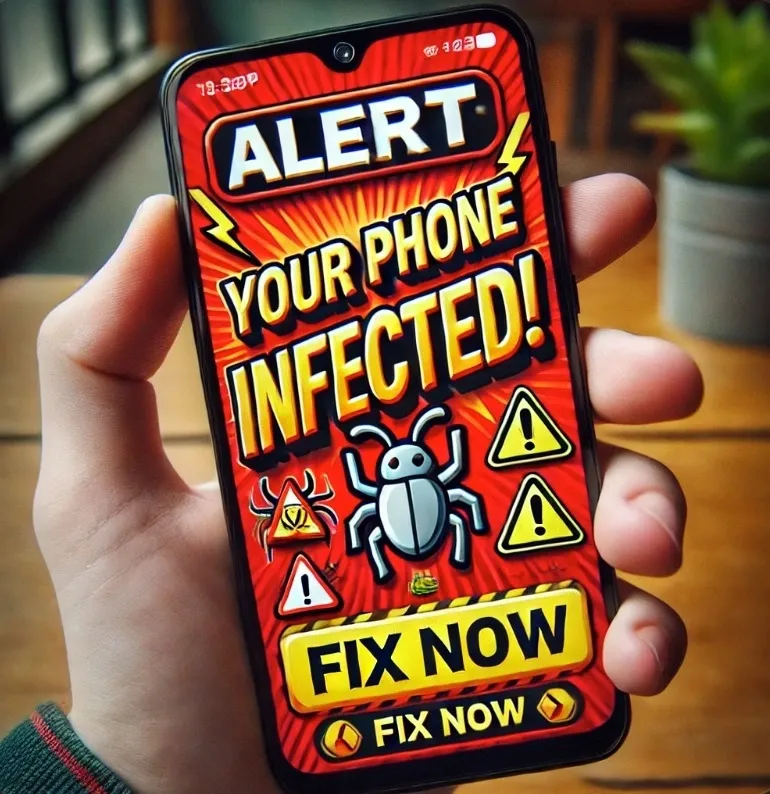
Peter, a retiree, often uses his phone for emails, browsing, and staying connected with family. One day, while reading an article online, a pop-up warning appeared on his screen: “ALERT! Your phone has been infected with a dangerous virus! Click here to secure your device immediately.”
Worried about the message, Peter clicked the link. It took him to a site that looked like a legitimate antivirus company, offering to scan his phone for free. The scan quickly “detected” multiple viruses and malware, urging him to buy their premium protection for $79.99 to fix the issues and avoid losing his personal data.
In a panic, Peter entered his credit card information and purchased the software. Unfortunately, not only did he pay for an unnecessary product, but he also unknowingly gave scammers access to his financial information. Days later, fraudulent charges began appearing on his account.

This scam preys on users’ fear of having their phones compromised. Scammers create realistic-looking pop-ups or notifications that mimic trusted antivirus companies, warning of fake threats to prompt quick action. Once the victim clicks through, they are often led to a fraudulent website, pressured into buying “protection” software that is either completely useless or harmful to their device.
The primary goal is to either steal your financial details or gain access to sensitive data by installing malware disguised as antivirus software.
Key Takeaways for Scam Prevention:
Peter’s experience highlights the growing trend of scammers exploiting people’s fear of having viruses on their phones. By understanding the tactics used in these scams and how to recognize them, you can protect yourself from unnecessary expenses and serious security risks.
Remember: if something feels off, it probably is. Stay calm, avoid panic-driven clicks, and always verify before taking action to keep your phone and personal information safe.
Additional Blog Posts
The Age of Fraud: What Every Family Needs to Know About Scams Targeting Seniors
Jul 21, 2025
BLOG
Coming Soon: SeniorShield’s Chrome Extension for Real-Time Scam Protection — Powered by Our CareSquad Acquisition
Jul 16, 2025
BLOG
New FBI Report Shows Seniors Lost Nearly $5 Billion to Scams in 2024 — Here’s How We Can Stop It
May 19, 2025
BLOG
The Real Cost of Senior Fraud — And Why It’s Time for a New Approach
Apr 28, 2025
BLOG
Why Senior Living Communities Must Make Scam Protection a Priority
Apr 12, 2025
BLOG
The Caregiver’s New Role: Adding Scam Protection to Your Client’s Circle of Care
Apr 11, 2025
BLOG
🚨 Beware of the Latest Toll Fee Scams—Now Targeting Drivers in These States! 🚨
Mar 7, 2025
BLOG
Protect Seniors from Holiday Scams with Awareness and Tools
Nov 25, 2024
BLOG
Fake Political Campaign Schemes Frauding Seniors
Oct 23, 2024
BLOG
The Expensive Cost of Senior Fraud
Oct 1, 2024
BLOG