Published Apr 2, 2025
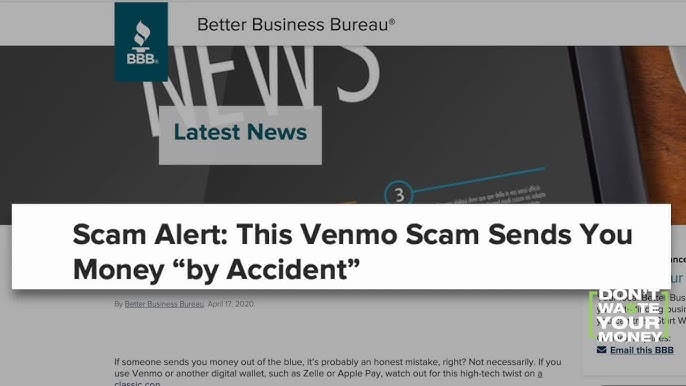
Imagine this: you check your bank account and notice an unexpected deposit — maybe a few hundred dollars — from someone you don’t know. Before you can make sense of it, you get a message from the sender: “Oops! I sent that to the wrong account — can you please send it back?”
It might sound like an honest mistake. But it’s likely a scam.
Here’s how it works and what you need to know to protect yourself or a loved one.
The scammer sends money — usually using a payment app like Zelle, Venmo, or even direct deposit — into your bank account or app wallet.
They contact you urgently, saying it was a mistake and asking you to send it back to a different account than the one it came from.
You send the money back, thinking you’re doing the right thing.
Then the original transfer gets reversed, either because it came from a stolen account, a fake check, or a fraudulently linked payment method.
Now you’re out the money you “refunded”, and the scammer disappears.

• The original payment was never legit. It often gets flagged as fraud later and pulled from your account.
• Once you send money back, it’s gone. Especially with apps like Zelle or Venmo, there’s no buyer protection or fraud insurance.
• It preys on your good nature. Most people want to help correct a mistake — scammers count on that.
• Don’t send anything back right away. Take a breath and investigate first.
• Call your bank and explain the situation. Let them track where the deposit came from and whether it’s legitimate.
• Don’t engage with the sender through text or app messages. If it was truly a mistake, they can resolve it through their bank — not by messaging strangers.
• Report it. Notify your bank, and if it came through an app like Venmo or Zelle, report the user immediately.
• Turn off auto-deposit on apps like Zelle so you have to manually approve incoming transfers.
• Talk to your loved ones, especially older family members, about this scam — they may be more likely to fall for it.
• Use strong privacy settings on payment apps and don’t accept money from people you don’t know.
At SeniorShield, we believe awareness is the first step toward protection. These scams are getting more creative by the day — but with the right info, we can outsmart them together.
💬 Have a story about this scam or something similar? We’d love to hear it — email us at john@seniorshield.ai
Additional Blog Posts
The Age of Fraud: What Every Family Needs to Know About Scams Targeting Seniors
Jul 21, 2025
BLOG
Coming Soon: SeniorShield’s Chrome Extension for Real-Time Scam Protection — Powered by Our CareSquad Acquisition
Jul 16, 2025
BLOG
New FBI Report Shows Seniors Lost Nearly $5 Billion to Scams in 2024 — Here’s How We Can Stop It
May 19, 2025
BLOG
The Real Cost of Senior Fraud — And Why It’s Time for a New Approach
Apr 28, 2025
BLOG
Why Senior Living Communities Must Make Scam Protection a Priority
Apr 12, 2025
BLOG
The Caregiver’s New Role: Adding Scam Protection to Your Client’s Circle of Care
Apr 11, 2025
BLOG
🚨 Beware of the Latest Toll Fee Scams—Now Targeting Drivers in These States! 🚨
Mar 7, 2025
BLOG
Protect Seniors from Holiday Scams with Awareness and Tools
Nov 25, 2024
BLOG
Fake Political Campaign Schemes Frauding Seniors
Oct 23, 2024
BLOG
The Expensive Cost of Senior Fraud
Oct 1, 2024
BLOG